

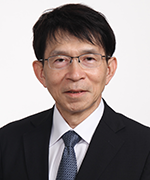
Hirokazu Hirai, M.D., Ph.D.
President
The 50th Annual Meeting of the Japan Neuroscience Society and the 4th China–Japan–Korea Neuroscience Meeting
Gunma University Graduate School of Medicine
It is my great honor and pleasure to welcome you to the 50th Annual Meeting of the Japan Neuroscience Society and the 4th China–Japan–Korea Neuroscience Meeting, which will be held at Makuhari Messe from July 20 to 23, 2027. I warmly welcome all participants joining us from around the world.
This meeting marks a major milestone for the Japan Neuroscience Society—the 50th Annual Meeting since its establishment. To commemorate this special occasion, we have chosen the theme:
“Bridging Tradition and Innovation in Neuroscience: Fifty Years of Progress and New Challenges”
The dandelion artwork featured on the conference website and poster was created by Tomihiro Hoshino, a renowned painter and poet closely associated with Gunma Prefecture. In 1970, Mr. Hoshino sustained a cervical spinal cord injury in a gymnastics accident and lost the use of his body below the neck. During his hospitalization at Gunma University Hospital, he began creating paintings and poems by holding a brush in his mouth.
In one of his poems, he wrote:
“If God would allow me to move my arms just once, I would massage my mother's shoulders.”
(In Japanese, this expression conveys a wish to comfort and ease the fatigue of his mother after years of hard work.)
More than fifty years have passed since the founding of the Japan Neuroscience Society. During this period, neuroscience has witnessed remarkable advances, including single-cell electrophysiology, RNA interference, induced pluripotent stem (iPS) cells, genome editing, and artificial intelligence (AI). These innovations have dramatically deepened our understanding of the brain and nervous system. Yet many neurological disorders, including spinal cord injury and neurodegenerative diseases, remain without definitive cures.
Mr. Hoshino’s life and work remind us of both the challenges and the hopes that neuroscience must embrace. Although he passed away in 2024, rapid advances in neuroscience and related technologies are bringing new therapeutic approaches for spinal cord injury and other intractable neurological disorders closer to reality. We increasingly feel that decades of scientific effort are steadily paving the way toward a future that may profoundly transform the lives of many patients.
This meeting will bring together leading scientists and promising young investigators from across Asia and around the world. We hope it will provide a forum where traditional scientific approaches and innovative technologies converge, fostering new discoveries, collaborations, and international partnerships.
The dandelion in Mr. Hoshino’s artwork also carries a message that resonates with the journey of scientific research. Senior researchers put down deep roots, blossom, and nurture the next generation. Young scientists then take flight, establish new roots in different places, and further advance science. I invite you to view Mr. Hoshino’s artwork through this lens as well.
It is my sincere hope that the new encounters and ideas born from this meeting will become a driving force for the next half-century of neuroscience, and that, in years to come, this commemorative meeting will be remembered as the starting point of a new era.
I look forward to welcoming you to Makuhari and to sharing an inspiring and memorable meeting with all of you.

©2026 The 50th Anniversary Annual Meeting of the Japan Neuroscience Society All Rights Reserved.